00technology / measured 2026.10.03
Technology
buildpassingframeworknonetrackers0cookies0fontsself-hostedapi/api/v1a11yreduced-motion
We build our own software and change it every day. Every number and chart on this page is measured directly from our internal repository.
changes to our software
6,500+
Changes merged into our software since 2026.03.20. Each one passed review before going into production.
2026.03.20 — 2026.10.03
as of 2026.10.03 · source: internal repository · automated changes excluded
- #12610docs2026-10-03merged into main
- #12609feat2026-10-03merged into main
- #12607fix2026-10-03merged into main
- #12606docs2026-10-03merged into main
- #12604chore2026-10-03merged into main
- #12602docs2026-10-03merged into main
- #12601feat2026-10-03merged into main
- #12600fix2026-10-03merged into main
- #12595docs2026-10-03merged into main
- #12593fix2026-10-03merged into main
- #12591chore2026-10-03merged into main
- #12589feat2026-10-03merged into main
- #12588chore2026-10-03merged into main
- #12587docs2026-10-03merged into main
- #12583feat2026-10-03merged into main
- #12581feat2026-10-03merged into main
- #12577feat2026-10-03merged into main
- #12575feat2026-10-03merged into main
- #12574feat2026-10-03merged into main
- #12573feat2026-10-03merged into main
- #12571feat2026-10-03merged into main
- #12568feat2026-10-03merged into main
- #12567feat2026-10-03merged into main
- #12565feat2026-10-03merged into main
- #12564feat2026-10-03merged into main
- #12561fix2026-10-03merged into main
- #12560feat2026-10-03merged into main
- #12556feat2026-10-03merged into main
- #12555feat2026-10-03merged into main
- #12554feat2026-10-03merged into main
- #12553chore2026-10-03merged into main
- #12550docs2026-10-03merged into main
- #12546fix2026-10-03merged into main
- #12543docs2026-10-03merged into main
- #12542fix2026-10-03merged into main
- #12541feat2026-10-03merged into main
- #12539fix2026-10-03merged into main
- #12537feat2026-10-03merged into main
- #12536chore2026-10-03merged into main
- #12534docs2026-10-03merged into main
01process
With AI, the people who build and the people who use become the same team.
Until now, the companies that built healthcare software and the medical institutions that used it were separate. Builders had to prioritize features common to many institutions, and users who asked for specific changes often waited a long time to see them.
AI has sharply reduced the cost and time of building software, so the people who know the front line can now build systems around how they actually work. At PreMed, every member of staff is an FDE (Forward Deployed Engineer). We develop as a small team working with AI agents, and what we notice when test-booking ourselves, or what doctors say after looking at a screen, usually reaches the staging environment the same day.
02one os, not point solutions
Some things point-solution SaaS cannot reach.
Booking, intake questionnaires, medical records, patient messaging, acquisition metrics — the work of a medical facility is connected, yet most systems so far have covered only one slice of it. PreMed builds all of these as a single OS, in the same team as the front line. clinic os, built for clinics, runs in the group's clinics, and hospital os, built for hospitals, is in development.
- 01
No manual work left at the seams
When systems are separate, copying and checking data between them remains a human job. With a single OS, the seams themselves disappear.
- 02
Fitted to our operations, not to the average
Products built for many institutions have to prioritize common features. We build around how the group's clinics work, and can fix things the same day.
- 03
One continuous view of the numbers
From the first point of patient acquisition through booking to the visit itself, everything sits on the same data — so "invest in acquisition, or add booking slots?" can be decided on a single screen.
- 04
The more clinics, the better the OS
Clinics that join through succession and newly opened clinics all run on the same OS. An improvement found at one clinic reaches every clinic.
- 05
Updated daily, and embedded on the front line
The front line changes every day. Updating once every few months is, in our view, already too slow. We update our software every day (6,500+ changes since 2026.03.20). What matters is building an organization that can embed each change on the front line, and the execution to see it through.
03galapagos
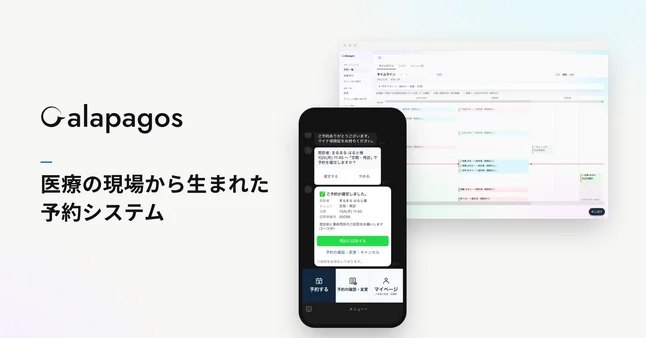
Galapagos, our booking system
Galapagos is scheduled to go into production at Kids Clinic Marumaru, opening in November 2026, and will then be rolled out step by step to the group's other clinics.
- 01
Patients book entirely within a LINE chat
Booking, rescheduling, cancelling, joining a waitlist, adding family members and filling in the questionnaire can all be done without leaving LINE. When a patient makes a request in free text, AI checks availability and suggests options; a booking is confirmed only when the patient presses the button themselves.
- 02
AI handles first response; only unanswered inquiries reach staff
AI answers within the information the clinic has prepared. It never answers symptom questions on its own judgement, and when it detects urgent wording it directs the patient to call 119 or the clinic.
- 03
AI agents carry out detailed admin settings
Most settings — opening hours, booking slots, services, questionnaire items — can be changed by asking an AI agent. What each user can do is governed by role-based permissions, and every change is logged with who made it.
- 04
Bookings and questionnaires sync automatically with the claims system and EMR
New patients are registered in the claims system as soon as their booking is confirmed, and questionnaire answers flow into the electronic medical record. Reception and consultation rooms no longer need to copy the same information by hand.
- 05
Automated messages before and after each appointment
Each message checks that the booking is still valid just before sending, so patients who have cancelled never receive a reminder the day before.
- 06
Features built for pediatric practice
Services shown by the child's age in months or years, last-minute slots for sudden symptoms, combined bookings for siblings or parent and child, vaccine stock linked to bookings, and more.
- 07
Acquisition tracked all the way to the visit
For each entry point — ads, website and others — it records how far each patient got through booking and whether they actually visited, in one continuous record. "Invest in acquisition, or add booking slots?" can be decided on the numbers.
- 08
A foundation for any specialty
Services, consultation durations, questionnaires and notices are set per clinic, and specialty-specific features can be switched off by clinics that don't use them.
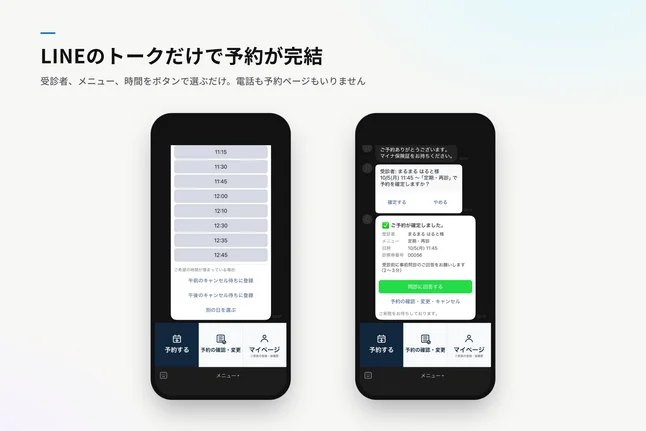
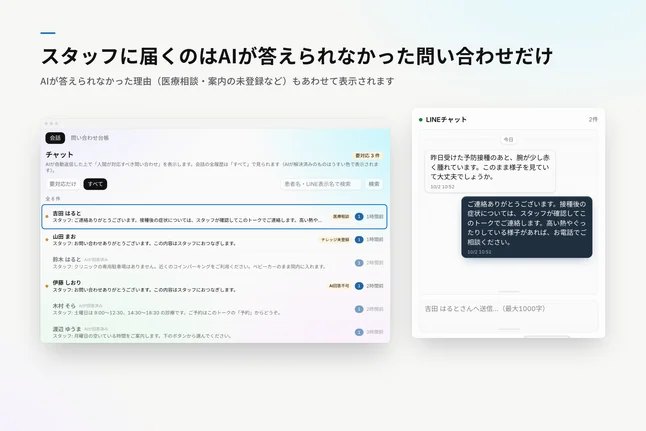
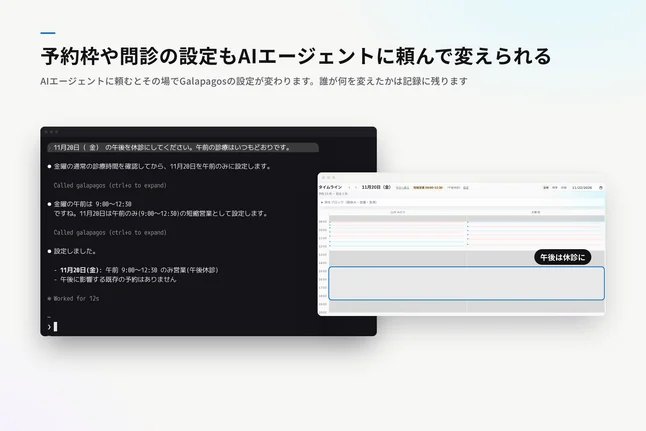
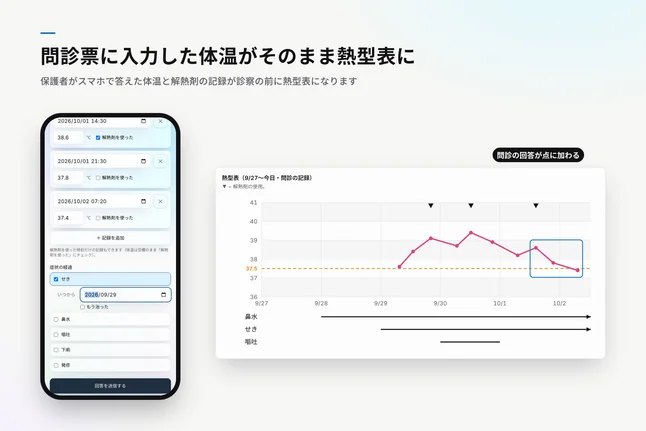
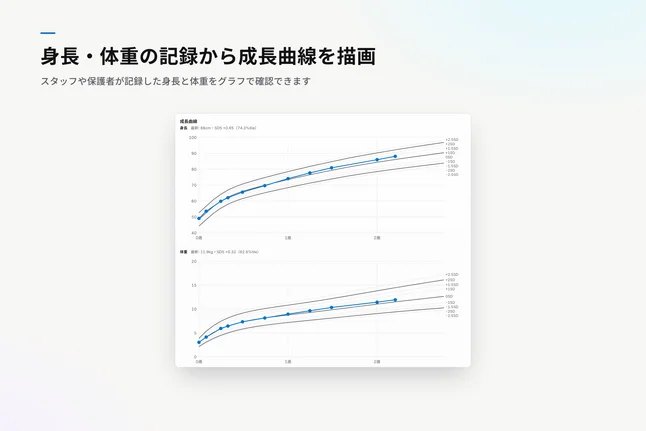
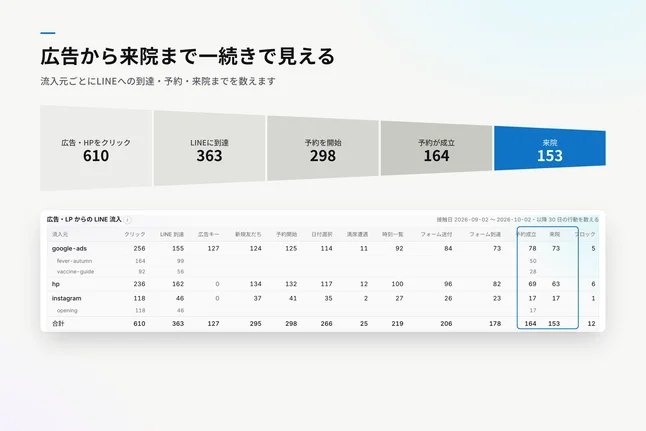
* Screens show fictitious demo data (images from the press release).
04toki — generative ui
TOKI, an EMR for fertility care
The electronic medical record used every day in the group's fertility care. Its defining feature is generative UI: the data stays as one, while each doctor can arrange the screen in their own way.
- 01
One set of data, a screen for each doctor
The same patient data is laid out differently for each doctor. Doctors used to a long-familiar layout keep it; doctors joining fresh get a clear standard screen. For each doctor, we preserve both "knowing where everything is" and "seeing it all on one screen".
- 02
AI drafts the screen; the doctor approves and locks it
AI drafts each screen definition, and only what the doctor has checked and approved is locked in for use. AI never rebuilds the screen on the fly during a consultation. For a medical record, consistency comes first: the same patient looks the same every time.
- 03
Fix it in one place
A screen is just a layout definition, so fields and data are corrected in one place only. Content never drifts out of sync between screens.
- 04
Front-line feedback goes straight to development
A button at the bottom right of the screen lets users send "it would be nice if…" on the spot. Each request is registered directly as a development issue.
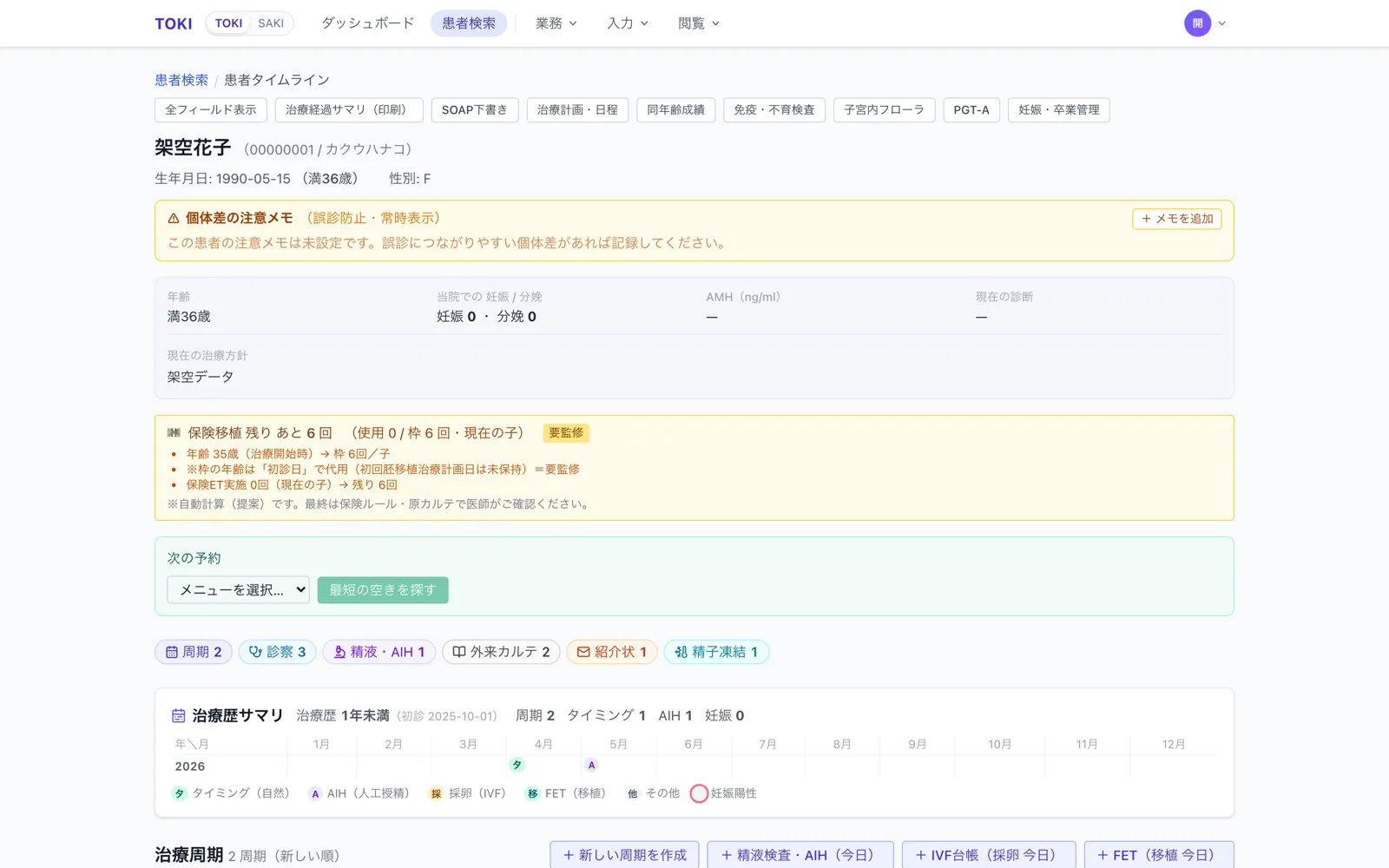
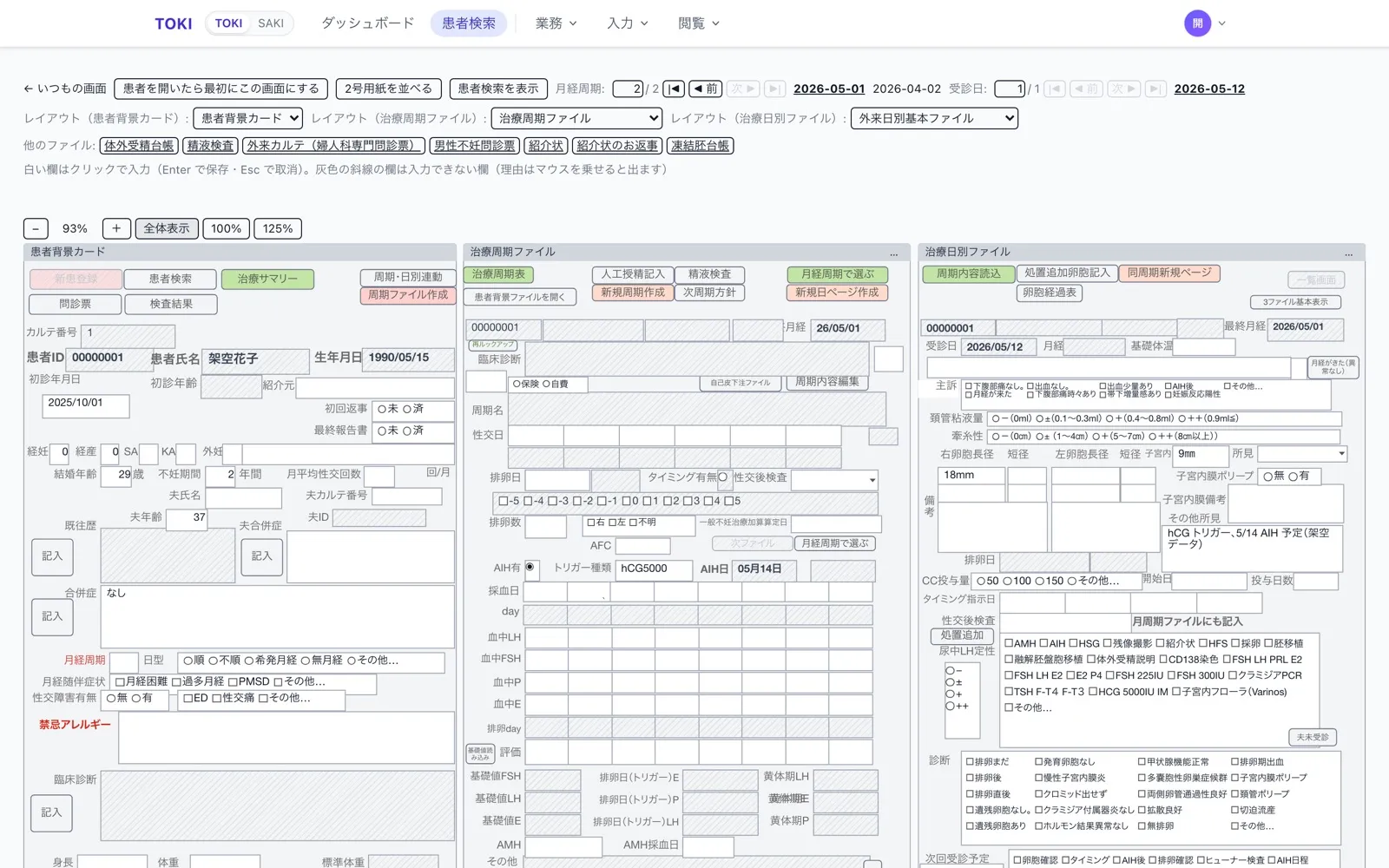
* Screens show fictitious demo data.